
Champions
Recent, frequent, and high-spending customers who are highly engaged and likely to respond to exclusive offers.
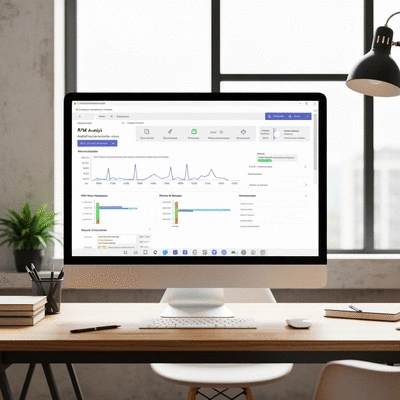
Curious about how to maximize your customer engagement? Understanding RFM analysis could be your key to transforming your marketing strategy. This powerful tool categorizes customers based on their purchasing behavior, enabling targeted marketing that speaks to their needs.
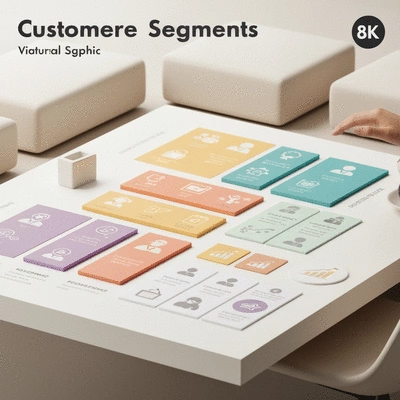
Customer segments reveal distinct purchasing behaviors, which can inform targeted marketing strategies. Below is a visual representation of key customer segments identified through RFM analysis. For more in-depth data organization, consider exploring mastering data sorting in Excel.
Recent, frequent, and high-spending customers who are highly engaged and likely to respond to exclusive offers.
Recently engaged but may not purchase frequently; targeted marketing can help convert them to loyal customers.
Customers who used to purchase frequently but haven't done so recently; may require re-engagement strategies.
Long-time customers who have stopped engaging; targeted retention campaigns can help win them back.
RFM analysis is a powerful marketing tool that helps businesses understand their customers better. By focusing on Recency, Frequency, and Monetary Value, or RFM, companies can segment customers based on their purchasing behavior. This analysis not only aids in identifying valuable customers but also enhances targeted marketing strategies, making it essential for any data-driven business.
At Sheet Nerds, we believe that mastering Excel can significantly boost your ability to conduct RFM analysis effectively. With the right tools and knowledge, you can turn raw customer data into actionable insights!
RFM analysis is a technique used to rank customers based on their purchasing habits. The key components include:
Understanding these factors allows businesses to tailor their marketing efforts, ultimately increasing customer retention and boosting sales. It’s a straightforward yet effective way to prioritize marketing resources towards the customers who matter most! To further refine your data analysis skills, check out our guide on essential Excel data cleaning tips.
RFM analysis transforms how businesses segment their customer base. By categorizing customers into distinct groups based on their RFM scores, companies can create targeted marketing strategies that resonate with each segment. Here’s how RFM analysis enhances customer segmentation:
By applying RFM analysis, businesses can avoid a one-size-fits-all approach, leading to more effective marketing campaigns. At Sheet Nerds, we thrive on helping you utilize Excel to segment your customers efficiently!
The RFM model is built on three fundamental components that provide insights into customer behavior. Each component plays a crucial role in determining customer value:
When you analyze these components together, you can uncover trends and patterns that inform better business decisions. Understanding the RFM model is the first step to leveraging Excel’s capabilities for deeper insights!
To maximize the effectiveness of your RFM analysis, consider incorporating customer feedback into your segmentation strategy. Engaging customers through surveys or feedback forms can provide additional insights that enhance your understanding of their needs and preferences, allowing for even more personalized marketing efforts.
Once you've conducted your RFM analysis, it’s time to interpret the results. This step is crucial in understanding how different customer segments behave based on their purchasing history. By analyzing Recency, Frequency, and Monetary value, we can draw insightful conclusions that guide our marketing strategies.
Effective interpretation helps us categorize customers into distinct segments, which is vital for targeted marketing. For example, customers who have purchased recently and frequently, along with higher monetary value, are likely your most loyal customers. On the other hand, clients who haven't engaged for a while may need reactivation campaigns.
In RFM analysis, segmentation outcomes can reveal a lot about customer behavior. Here’s a quick overview of how we can categorize customers:
Understanding these segments allows us to tailor our communications and promotions effectively. For instance, champions might appreciate exclusive offers, while at-risk customers may respond better to retention tactics, such as special discounts or re-engagement emails. For more on customer insights, explore analyzing customer lifetime value in Excel.
RFM scores serve as a powerful tool for making strategic business decisions. By analyzing these scores, we can prioritize resources and efforts on the most promising customer segments. For instance, targeted marketing campaigns can be devised specifically for champions and potential loyalists to boost their engagement even further.
Additionally, the insights from RFM scores can inform inventory decisions, ensuring that we have stock available for our most valuable customers. By understanding who our top clients are, we can align our marketing strategies with the products they love most!
Understanding the lifetime value of customers is essential for sustainable business growth. By integrating RFM scores into your analysis, you can evaluate which segments are likely to generate the most revenue over time. Here are a few steps to consider:
By focusing on the lifetime value, we can develop more effective strategies for customer retention, ensuring that we not only acquire customers but also keep them engaged for the long haul. At Sheet Nerds, we believe that understanding these dynamics is fundamental to enhancing overall business performance.
RFM stands for Recency, Frequency, and Monetary Value. These are the three key metrics used to segment customers based on their purchasing behavior.
RFM analysis is crucial because it helps businesses understand customer behavior, identify valuable customers, pinpoint at-risk customers, and tailor marketing strategies to increase retention and boost sales.
Common segments include Champions (recent, frequent, high-spending), Potential Loyalists (recently engaged but not frequent purchasers), At Risk (used to purchase frequently but not recently), and Lost Customers (long-time customers who have stopped engaging).
RFM scores help prioritize resources, tailor marketing campaigns for specific segments, inform inventory decisions, and align product offerings with the preferences of high-value customers.
By integrating RFM scores, businesses can analyze the average spend and retention rates of different segments, allowing them to project future revenue and develop effective strategies for long-term customer retention and growth.
As we move forward, automating your RFM analysis can save time and improve accuracy. In the next section, we’ll explore tools that can help you efficiently manage your data and analysis.
Here is a quick recap of the important points discussed in the article:
Final content section.